Is it time for a website redesign or a brand new build? Make sure your site is being built using the latest WordPress web development trends and the most up-to-date code. Our website development agency keeps up with the latest WordPress developments so we can continue to deliver exceptional websites to our clients. Here’s what to expect from the world’s leading content management system in 2026 and beyond.
Why Is WordPress Still the Web’s Dominant CMS?
Powering around 43% of all websites globally — and over 70 million ecommerce stores — WordPress continues to dominate every other content management system on the planet. TheeDigital uses WordPress exclusively for all our web design and development clients. But why do so many developers and agencies continue to choose this platform year after year?
WordPress is user-friendly enough for novice site administrators while powerful enough for enterprise-level builds. With the Gutenberg block editor, even non-technical users can control page layouts and user experience without writing a single line of code. WordPress also offers a massive ecosystem of free and premium plugins, making it infinitely customizable. And unlike proprietary platforms, you own your data and your code.
Benefits of WordPress Websites
- Easy-to-use for business owners and admins
- Mobile-ready and responsive out of the box
- SEO-friendly with robust tooling support
- Powerful plugin ecosystem with thousands of options
- Regular updates with ongoing security patches
- Open source — no vendor lock-in
Top WordPress Trends & Updates in 2026
WordPress 6.9 “Gene” and the Road to WordPress 7.0
WordPress closed out 2025 strong with the release of WordPress 6.9 “Gene” in December, and 2026 is already shaping up to be an even bigger year. The platform is returning to three major releases in 2026, with WordPress 7.0 targeted for launch on April 9 at WordCamp Asia.
Here’s what’s driving momentum in the platform right now:
WordPress 6.8 “Cecil” (April 2025) brought meaningful under-the-hood improvements including:
- Speculative loading — proactively prefetches pages the visitor is likely to navigate to, resulting in faster perceived load times
- bcrypt password hashing — a significant security upgrade replacing the older MD5-based system
- 100+ accessibility improvements — including better keyboard navigation and screen reader compatibility
- Style Book for classic themes — previously only available for block themes, giving more design control to a wider range of site owners
WordPress 6.9 “Gene” (December 2025) pushed the platform into Phase 3 of its roadmap — focused on collaboration — with standout features including:
- Block-level commenting and notes — team members can leave feedback directly on content blocks, eliminating the email-and-markup back-and-forth
- Six new core blocks — including Accordion and Math blocks, reducing reliance on third-party plugins
- A universal command palette — accessible across all parts of the dashboard for faster navigation
- 2.8–5.8% performance uplift over WordPress 6.8
WordPress 7.0 (April 2026) is expected to continue the collaboration theme with real-time, Google Docs-style co-editing as the headline feature — one of the most anticipated developments in the platform’s history.
AI Integration in WordPress
AI isn’t just a buzzword anymore — it’s baked into the WordPress development workflow. In 2026, we’re seeing AI surface in meaningful ways across the platform:
- AI-assisted content creation — intelligent suggestions for structure, readability, and SEO optimization directly in the editor
- AI search and smart filtering — surfacing the right content, blocks, and patterns faster than manual browsing
- AI-powered plugins — tools that automate tasks like alt text generation, translation, and content auditing
- Developer tooling — AI coding assistants are accelerating custom theme and plugin development significantly
TheeDigital leverages AI to work smarter and deliver better-performing websites for clients — not to replace craftsmanship, but to enhance it.
Full Site Editing (FSE) Matures
Full Site Editing has gone from experimental to mainstream. In 2026, Gutenberg and the Site Editor are the primary way developers build and manage WordPress themes. What this means practically:
- Complete control over headers, footers, sidebars, and templates — all without touching PHP
theme.jsondefines global styles, colors, typography, and spacing in one centralized file- Block patterns and template parts allow reusable design components across a site
- Style Book gives clients and developers a live preview of all typographic and color choices in one place
If your current site is still running a page builder or a classic PHP theme, 2026 is the year to seriously consider a migration to FSE.
WordPress for Ecommerce
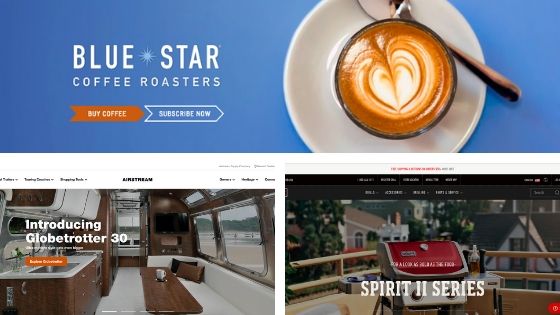
Ecommerce remains one of WordPress’s biggest strengths. WooCommerce continues to power over 6 million online stores — including household names like Mint Mobile, GoDaddy, and Golden Corral — and is evolving rapidly to meet modern ecommerce expectations.
Key ecommerce trends to watch in 2026:
- Headless WooCommerce — decoupling the front end from WordPress for lightning-fast storefronts
- Improved block-based checkout — reducing friction with a fully customizable checkout experience built on core blocks
- AI-powered product recommendations — surfacing relevant items based on browsing behavior
- Better PWA (Progressive Web App) support — enabling app-like shopping experiences without a native app
If you decide to use WooCommerce to power your online store, you’ll be in good company!
Cybersecurity Is Non-Negotiable
Security continues to be a top priority. The bcrypt upgrade in WordPress 6.8 is a meaningful step, but site-level security requires ongoing attention:
- Two-factor authentication (2FA) is becoming a standard expectation, not an add-on
- DDoS attacks rose over 115% according to a 2023 Cloudflare report — and the trend has continued upward
- Automated vulnerability scanning tools are now commonly integrated into hosting environments
- Regular plugin and core updates remain the single most effective defense against known exploits
TheeDigital keeps client sites secure through proactive monitoring, managed hosting on platforms like WP Engine and Kinsta, and disciplined update practices.
Core Web Vitals and Page Speed
Google’s Core Web Vitals continue to influence both search rankings and user experience. In 2026, the three metrics that matter most remain:
- LCP (Largest Contentful Paint) — how fast the main content loads
- CLS (Cumulative Layout Shift) — visual stability as the page renders
- INP (Interaction to Next Paint) — the updated responsiveness metric that replaced FID
WordPress 6.8’s speculative loading directly addresses LCP and INP by preloading pages in the background before users click. Combined with native image optimization, lazy loading enhancements, and leaner theme builds, WordPress sites in 2026 can achieve top-tier performance scores without relying on heavy caching plugins.
Useful tools for monitoring your scores:
- Google Search Console
- PageSpeed Insights
- Lighthouse
- WebPageTest
Data Privacy and Compliance
Compliance requirements continue to expand globally. Businesses operating websites in 2026 need to ensure they are meeting the appropriate standards for their market:
- GDPR (European Union)
- CCPA / CPRA (California)
- HIPAA (healthcare organizations in the US)
- Emerging state-level privacy laws across the US
WordPress has a strong ecosystem of tools for consent management, cookie banners, and data access requests. Our team helps clients navigate compliance requirements specific to their industry and geography.
Micro Interactions and Motion Design
Subtle, purposeful animations continue to be a strong web design trend. Micro interactions — small UI responses that acknowledge user actions — improve engagement and reinforce brand personality. In 2026, the best implementations use:
- SVG animations for crisp, scalable motion
- LottieFiles — up to 600% smaller than GIFs with superior load performance
- CSS-native transitions for performance-safe hover effects and state changes
The key is restraint. Motion should guide attention, not distract from it.
Push Notifications and PWA Features
Progressive Web App capabilities are becoming more accessible within WordPress in 2026. Push notifications remain a high-value tool for re-engagement:
- Cart abandonment reminders in WooCommerce stores
- Flash sale and promotional alerts
- New content notifications for publishers and media sites
When implemented thoughtfully, push notifications drive measurable lift in repeat visits and conversion rates — without the cost of a native mobile app.
Final Word: Build for 2026, Not 2020
WordPress is moving fast. Between WordPress 7.0’s real-time collaboration features on the horizon, Gutenberg’s maturation into a full site-building system, and AI capabilities woven throughout the ecosystem, the platform in 2026 looks dramatically different from where it was just a few years ago.
Whether you’re planning a redesign or a ground-up rebuild, the decisions you make about your platform, architecture, and performance will have long-term consequences. Our team at TheeDigital stays current with every major WordPress release so your site doesn’t fall behind.
Ready to build something great? Contact our WordPress experts at 919-341-8901 or schedule a free consultation.
Tags: Web Development • WordPress

Melissa Read
Melissa is Lead Project Manager at TheeDigital with over 25 years of eCommerce, web design and project management skills, along with design, development and copywriting. See all posts written by Melissa.